

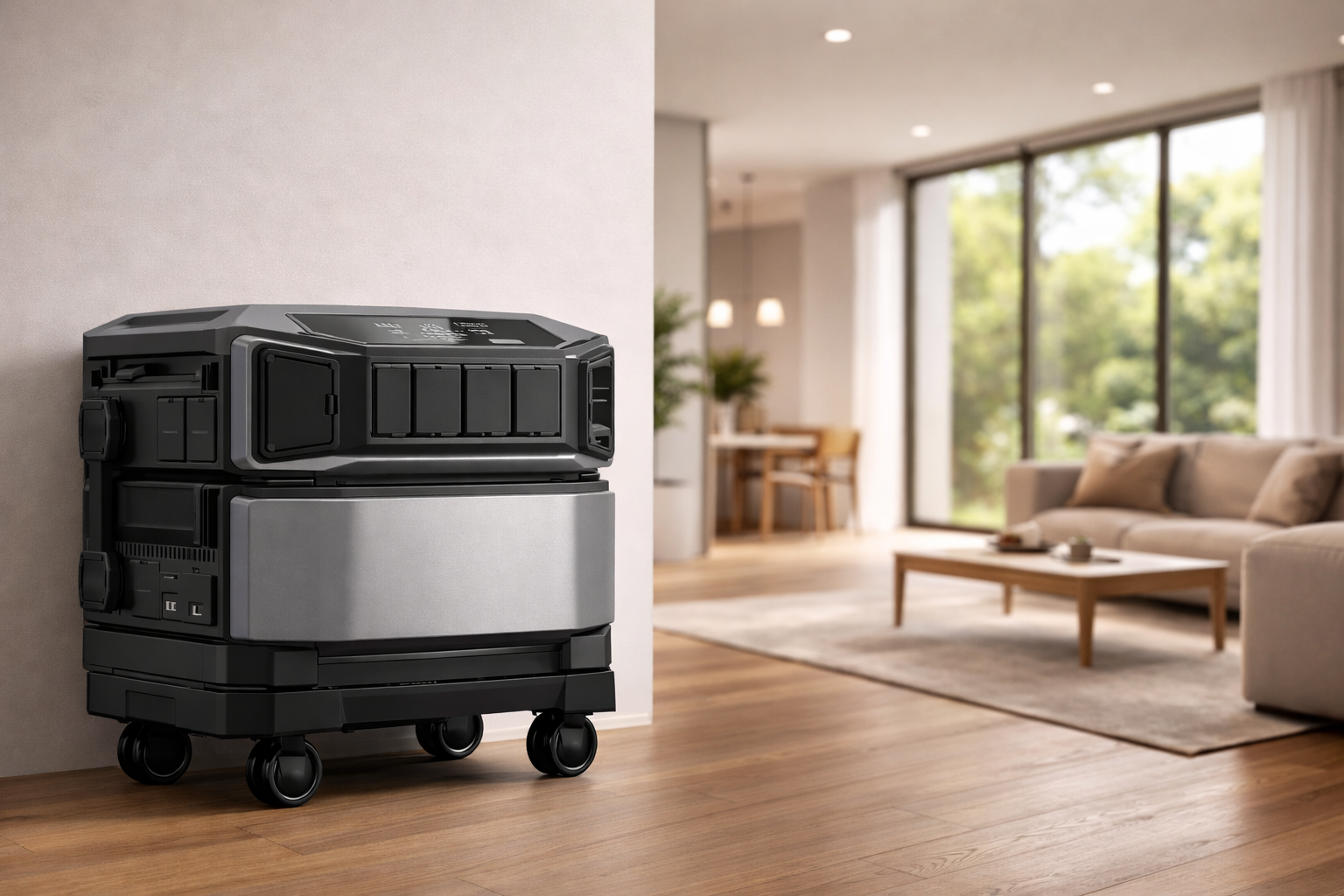
Best Home Battery Backup Systems for Reliable Backup Power
Home Battery Backups - Why It Matters
The grid is less reliable than it used to be and the consequences of an outage are higher.
U.S. power outages have increased significantly over the past two decades due to aging infrastructure, extreme weather events, and growing grid demand. For most households, a multi-day outage means food spoilage, loss of heating or cooling, inability to work remotely, and disruption to medical devices that require continuous power. Home battery backup systems provide a buffer between grid instability and your daily life. Modern LFP (lithium iron phosphate) battery systems are safer, longer-lasting, and more efficient than earlier lithium-ion technologies, rated for thousands of charge cycles with minimal capacity degradation. Paired with solar panels, they enable meaningful energy independence. Used standalone, they provide reliable backup power that activates automatically during grid failures. What to look for: Total energy capacity (kWh), continuous output wattage, peak surge wattage for motors and compressors, charge input options (solar/AC/car), and battery chemistry (LFP preferred for longevity and safety).


Home Battery Backups
Frequently Asked Questions
A UPS (Uninterruptible Power Supply) is designed to protect electronics during brief outages, typically providing minutes of power to allow a safe shutdown. A home battery backup system like the EcoFlow Delta Pro Ultra is designed to power your entire home or critical circuits (refrigerator, HVAC, medical equipment, lights) for hours or days, and can be recharged via solar panels, your car, or the grid. If you're preparing for extended outages or want energy independence, a full battery backup system is the right choice.
It depends on the system's output capacity and your home's consumption. The EcoFlow Delta Pro Ultra at 7,200W output can power most essential circuits, refrigerator, lights, devices, fans, and even some HVAC systems, but may not simultaneously run a large electric range or central air conditioning compressor at full load. We can help you calculate your home's essential load before purchasing.
Yes. Battery systems can be charged from the grid during off-peak hours (when rates are lower) and discharged during peak hours or outages. Even without solar, they provide meaningful energy cost savings and critical protection during grid failures.